

What to Do in the First 72 Hours After a Hailstorm in Northwest Arkansas
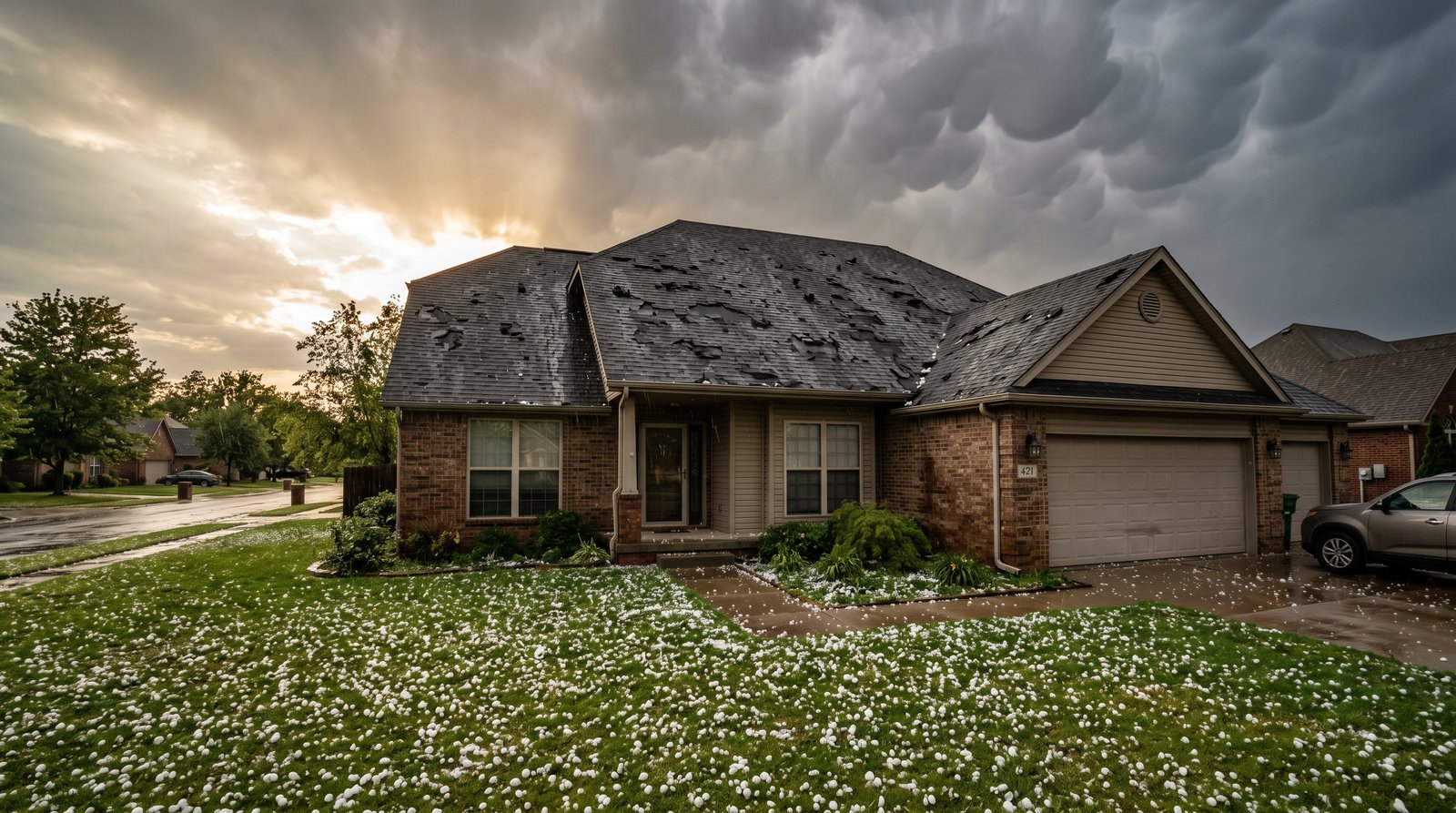
On April 28, 2026, a major hailstorm swept through Northwest Arkansas, dropping ping-pong to baseball-sized hail across Siloam Springs, Fayetteville, Springdale, Rogers, Bella Vista, and Bentonville. If you're reading this today, you're probably standing in your living room wondering what just happened to your house. This guide is for you — a practical, step-by-step breakdown of exactly what to do in the next 72 hours.
Hour 0–12: Safety First
Before you do anything else, keep yourself safe. Hail damage is stressful, but injuries are worse.
Don't climb on the roof. The surface is wet, potentially covered in hail debris, and possibly compromised. You can't meaningfully assess damage from up there anyway — that's what trained inspectors are for.
Move vehicles under cover if there's any chance of additional hail or severe weather. Check the forecast before you go back outside. More cells can follow the same track.
If water is coming inside, locate the source as best you can from inside and place buckets or towels. If you can safely access your attic, check for active dripping. Call a roofing contractor to help get a tarp in place — don't attempt to DIY tarp work on a wet roof in storm conditions. That's how people get hurt.
Check for downed power lines before going outside. After a storm this size, downed lines in yards and driveways are a real risk. If you see one, stay inside and call 911.
Document leak locations with your phone. Photograph or video any water entry points inside the house right now, before anything dries. Time-stamped photos of interior damage are part of your claim.
Hour 12–24: Document Everything
This is the most important thing you will do for your insurance claim, and you can do it yourself with nothing but a smartphone.
Walk the entire property with your camera. Photograph every elevation of the roof from the ground. You don't need to get up there — just walk around the house and shoot upward. What you're looking for (and what adjusters look for): missing shingles, dented ridge caps, granule loss visible from the ground, and damaged pipe boots or flashing.
Don't stop at the roof. Photograph everything:
- Gutters and downspouts (hail dents them consistently and adjusters use this as a baseline confirmation)
- Siding (hail leaves distinct circular dents on vinyl and aluminum)
- Window screens (torn or punched-through screens are easy to document)
- The AC condenser unit outside — fins on the condenser are almost always damaged in a storm this size. Photograph it close up. HVAC adjusters check this separately, but it's part of the full loss.
- Wood fences and deck rails
- Any vehicles that were outside
Save weather documentation. Screenshot or download radar images from Weather.gov or the National Weather Service Little Rock office for your zip code showing the storm track. Print or save the archived radar loop. This is hard, objective evidence that hail fell at your address and is often required by carriers.
Check the attic. Look for wet insulation, water stains on the sheathing, or daylight coming through. Any of these mean you have penetration.
Don't throw anything away yet. Damaged screens, dented gutters, cracked vent covers — leave them. Adjusters need to see actual damage, not hear about it.
Hour 24–48: Get a Real Inspection
Not all damage is visible from the ground, and not all adjusters find everything.
Why insurance adjusters and roofing contractors often see different things. Insurance adjusters are often handling dozens of claims after a storm event. They're trained on their carrier's standards, which may not match what a roofing contractor sees day-to-day. It's not malicious — they just have different reference points and time pressures. Adjusters may miss functional damage to shingles that doesn't look dramatic from the ridge but has broken the granule bond and will leak within two years.
Get a roofing contractor on-site before or during the adjuster's visit. This is your right as a policyholder, and a good contractor will document damage in detail, provide a written scope, and walk the roof with the adjuster. That conversation often surfaces damage the adjuster would have missed.
Understand "matching." If hail damages half your roof, most insurance policies in Arkansas require that replacement materials match the undamaged sections reasonably well. This matters because the same shingle product may be discontinued, or the color of weathered shingles won't match new ones. Bring this up with your contractor and adjuster early — it's not a complicated argument, but it needs to be made before work begins, not after.
How to identify a legitimate roofing contractor:
- Has an Arkansas contractor's license (verify at the Arkansas Contractor's Licensing Board: aclb.arkansas.gov)
- Has a physical local address — not just a PO box or a cell number
- Has real, verifiable reviews (Google, BBB) that go back more than six months
- Does not knock on your door and pressure you to sign a contract on the spot
- Will work with your insurance company and explain the process
- Does not charge for the initial inspection — free roof inspections after a major storm are standard practice in this industry. Anyone charging upfront for an inspection after a disaster is a red flag.
Hour 48–72: File the Claim, Schedule the Work
Call your insurance company sooner rather than later. Most homeowner policies have deadlines for filing a claim after a loss event. Some are as short as one year, but some carriers are stricter. Filing early also means you get in the adjuster queue earlier — after a regional storm like this one, demand for adjuster visits spikes fast.
The claim process, step by step:
- Report the claim — online or by phone. Note the claim number.
- Adjuster visit — the carrier schedules an inspection, usually within one to three weeks after a major event.
- Estimate — the adjuster produces a scope of loss and a dollar estimate. Review it carefully.
- ACV payment — you'll typically receive an "Actual Cash Value" payment first. This is the replacement cost minus depreciation. It's not the final payment.
- Contractor scope — your roofing contractor reviews the adjuster's scope, identifies anything missing, and submits supplements for items the adjuster didn't include.
- Supplements — your contractor works with the carrier to agree on a final scope.
- RCV payment — once the work is complete, you submit proof of completion (invoices) and receive the "Recoverable Depreciation" — the amount withheld in the first check.
Recoverable depreciation is real money. The gap between your initial ACV check and the final RCV payment can be significant, depending on your roof's age and your coverage. You only get it after the work is done and documented. Don't skip that step.
Assignment of Benefits: read carefully. Some contractors ask you to sign an "Assignment of Benefits" (AOB) form, which transfers your insurance rights to them. This is legal in Arkansas but gives them direct authority to negotiate and collect from your carrier — sometimes without your ongoing involvement. That can work fine, but read what you're signing and understand what you're handing over before you do.
Permits matter. Bentonville, Fayetteville, Springdale, and Rogers all require permits for roof replacements. A legitimate contractor will pull permits as part of the job. If a contractor offers to skip the permit "to save time," that's a problem — unpermitted work can create complications with future insurance claims and resale.
Storm Chaser Warning Signs
After every major hail event, out-of-area contractors flood into affected communities. Some are fine. Many are not. Here's what to watch for:
Out-of-state license plates. If the truck in your driveway is from Texas, Oklahoma, or Kansas and the driver "just happened to be in the area," they followed the storm here. That doesn't disqualify them, but proceed carefully.
"We were just working in your neighborhood." This line is used deliberately. It creates artificial social proof. Ask for the address.
Pressure to sign immediately. Any contractor who says the deal is only good today is using a sales tactic, not doing you a favor. You have time to review contracts.
Verbal-only commitments. If they won't put the scope, price, timeline, and warranty in writing before you sign, don't sign.
"Free roof" promises. If someone tells you they can get you a free roof through your insurance, they're describing insurance fraud. In Arkansas, contractors are prohibited from waiving your deductible — that's the insured's legal obligation. Any contractor who offers to cover it is committing a crime.
Disappearing after the deposit. Storm chasers collect deposits, sometimes start work, and then become unreachable. Verify the contractor has a verifiable local address, a local phone number, and a history of completed jobs before writing any checks.
What Pinnacle Roofing & Siding Does
Pinnacle Roofing & Siding is based in Northwest Arkansas and has been serving this community since 2010. We're family-owned, locally licensed and insured, and we don't use out-of-state crews.
After a storm like April 28, we offer free inspections within 24–48 hours. Our team documents damage with both drone photography and ground-level photos — the same documentation that's most effective when working through an insurance claim.
We work directly with all major insurance carriers. We'll walk the roof with your adjuster, review the scope with you before anything is signed, and handle supplements if the initial estimate misses items.
Our office took baseball-sized hail on April 28. We know exactly what this storm did.
Call us at (479) 250-1470 to schedule your inspection.
The Bottom Line
Take photos today — every surface, every elevation, every item that got hit. Call your insurance company tomorrow to open the claim and get in the queue. Get a local, licensed inspector on-site this week to walk the roof before or with the adjuster. And don't sign anything — contracts, AOBs, or scopes of work — until you've read it and understand what it says.
The damage is done. What you do in the next 72 hours determines how the repair process goes.